Self-help wellbeing applications
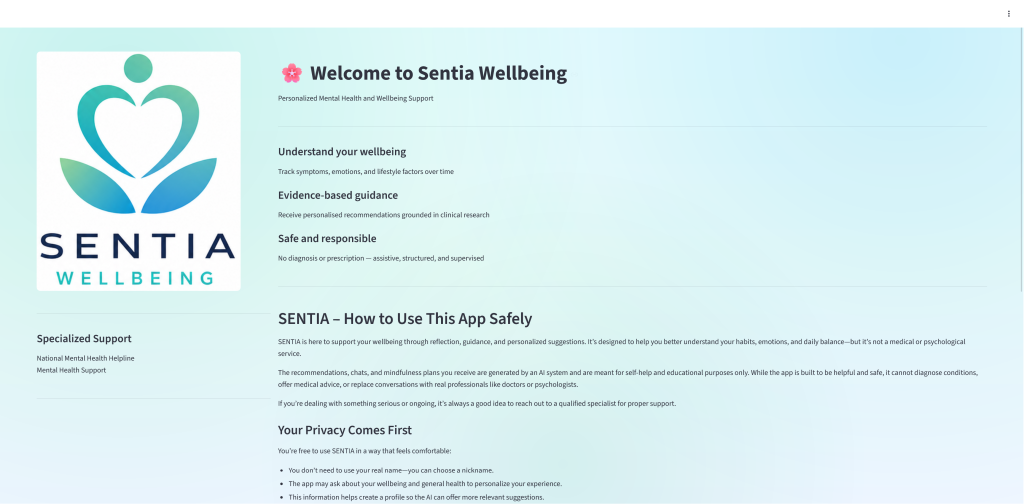
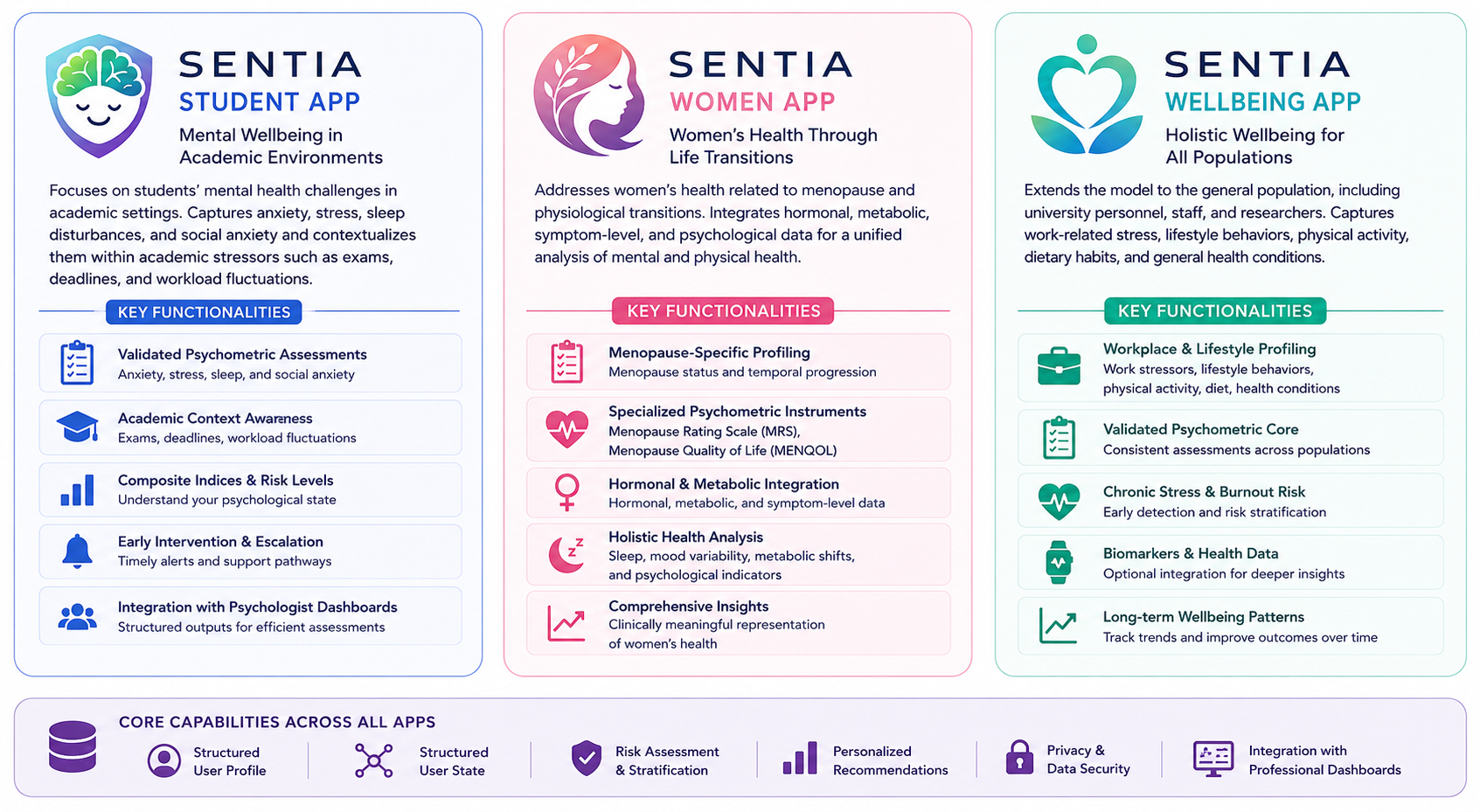
The SENTIA Wellbeing initiative is structured around three primary self-help applications, each addressing a distinct population while preserving the same methodological foundation:
Students App
SENTIA Student Self-Help Companion is being developed within the AIforStudents: Deterministic and AI-Driven Digital Platforms for Research Support and Student Wellbeing Monitoring project implemented by the Bucharest University of Economic Studies. The platform is specifically designed to promote psychological wellbeing, facilitate early risk detection, and provide evidence-based support for undergraduate and master’s students.
It captures anxiety, stress, sleep disturbances, and social anxiety through validated psychometric instruments and contextualises them within academic stressors such as exams, deadlines, and workload fluctuations.
The system computes composite indices and risk levels, enabling students to understand their psychological state while supporting early intervention through escalation mechanisms. The structured outputs also feed into psychologists’ dashboards, improving assessment efficiency and reducing repetitive intake processes.
Read more about SENTIA Student Self-Help Companion
Women App
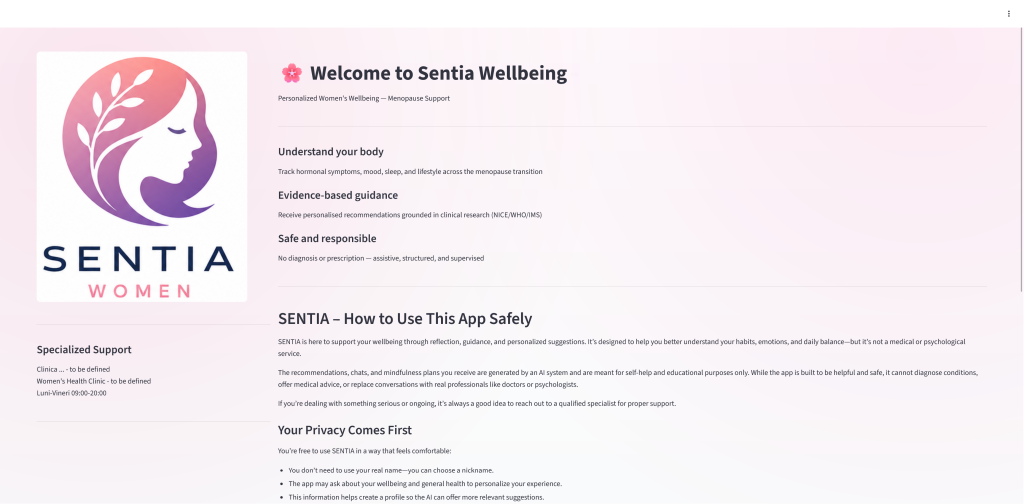
SENTIA Wellbeing for Women addresses women health related to physiological transitions during menopause. In this version, the user profile is augmented with menopause-specific attributes such as menopause status and temporal progression, alongside specialised psychometric instruments including the Menopause Rating Scale (MRS) and Menopause Quality of Life (MENQOL).
The system integrates hormonal, metabolic, and symptom-level data with psychological indicators, enabling a unified analysis of mental health and wellbeing. This results in a more complex but clinically meaningful representation of user state, where hormonal changes, sleep disturbances, mood variability, and metabolic shifts are jointly analysed within the same framework.
Wellbeing App
SENTIA Wellbeing addresses general population and the structured user state incorporates work-related stressors, lifestyle behaviors, physical activity, dietary habits, and general health conditions. The structured user state allows the system to capture chronic stress, burnout risk, and long-term wellbeing patterns.