
AI-Assisted Monitoring, Phenotyping, and Evidence-Based Clinical Support
SENTIA for Specialists is an advanced digital platform designed to support psychologists, clinicians, and healthcare professionals through continuous monitoring, explainable analytics, and evidence-based decision support.
The platform combines structured psychometric assessments, behavioral and linguistic analysis, phenotype discovery, and scientific literature retrieval into a unified ecosystem that assists professionals in understanding patient trajectories, identifying emerging risks, and exploring evidence-supported intervention pathways.
Importantly, SENTIA does not replace professional judgment. All insights, hypotheses, and recommendations are designed to augment clinical reasoning and remain under specialist supervision.
1. Advanced Monitoring Dashboard
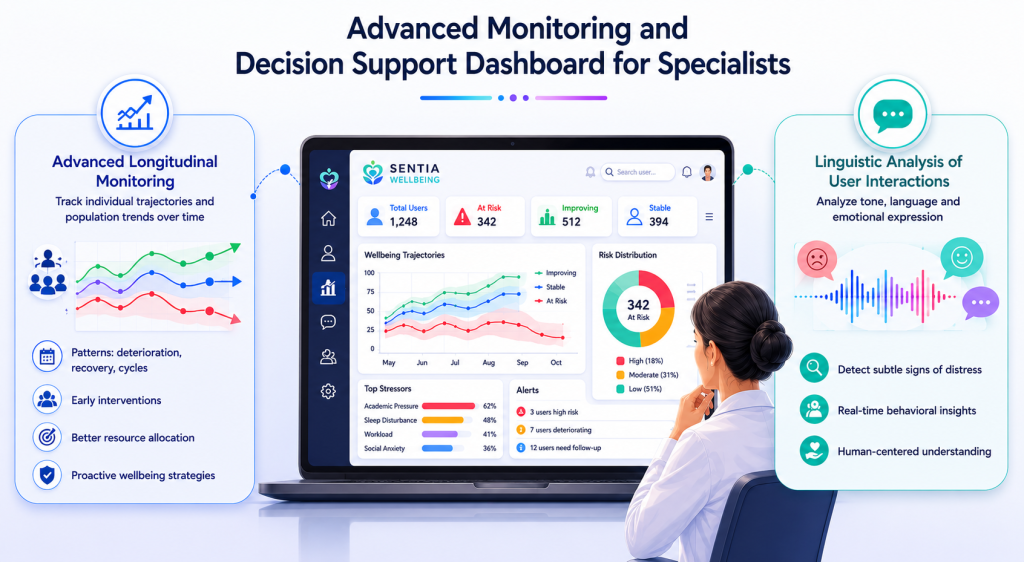
The SENTIA Dashboard provides a comprehensive view of individual and population-level wellbeing dynamics.
Individual-Level Monitoring
For each patient or user, specialists can access:
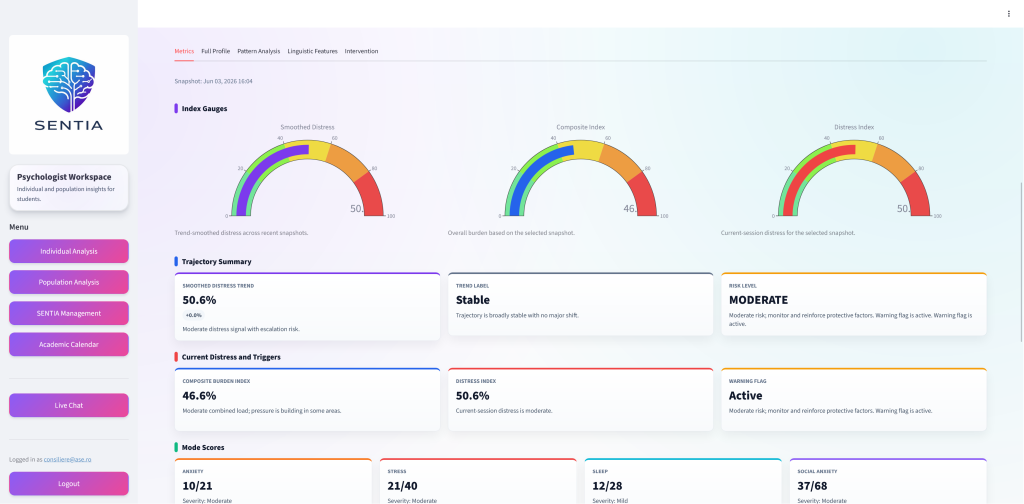
- Longitudinal evolution of psychometric scores
- Anxiety, stress, sleep, mood, and wellbeing trajectories
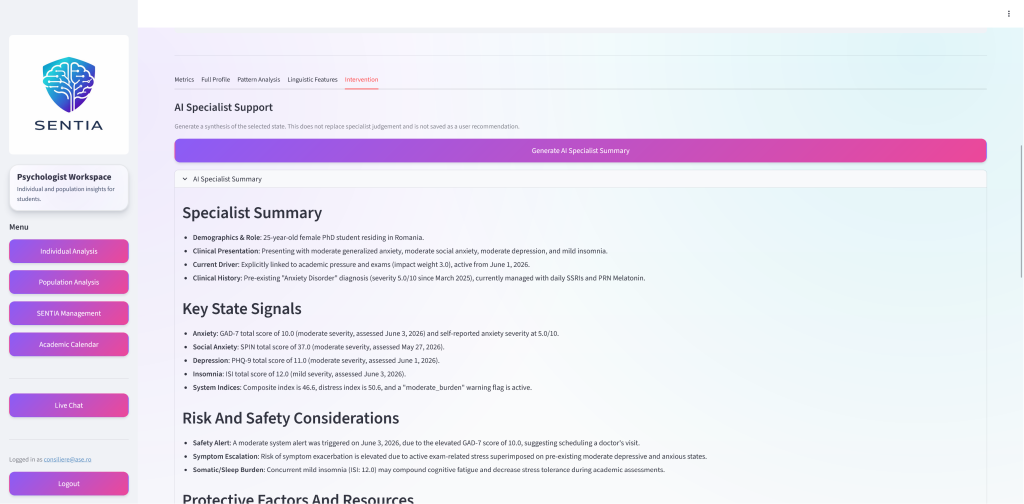
- Risk stratification and early warning indicators
- Contextual factors and lifestyle-related contributors
- Historical trends and progression patterns
- Structured summaries that support more efficient consultations
Instead of relying solely on isolated assessments, clinicians can observe how symptoms evolve over time and identify periods of deterioration, recovery, or recurring vulnerability.
Population-Level Analytics
At the organizational level, SENTIA provides:
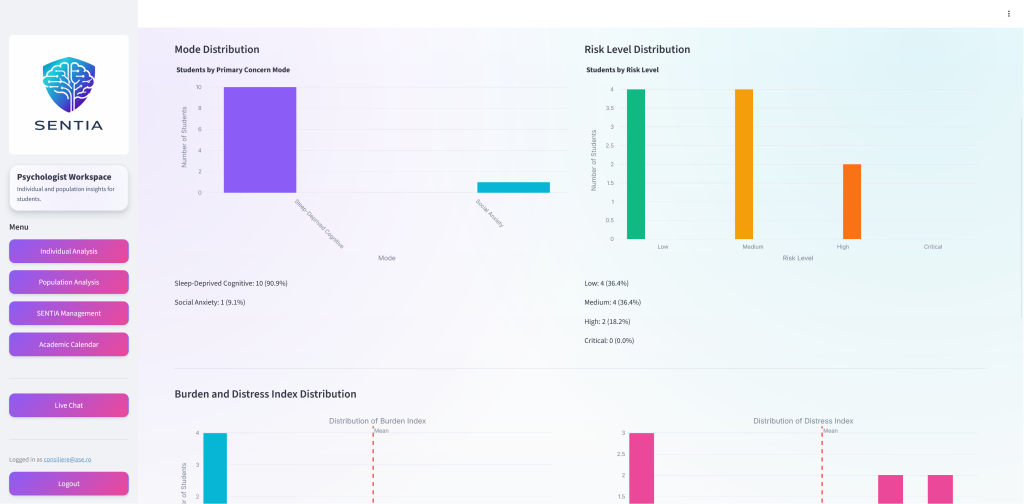
- Population health monitoring
- Identification of high-risk groups
- Trend analysis across departments, age groups, or cohorts
- Detection of periods associated with increased psychological burden
- Support for resource allocation and preventive interventions
All analyses operate on privacy-compliant data.
Linguistic Analysis
Beyond questionnaires and structured assessments, SENTIA analyzes user-generated language to identify subtle psychological signals that may not yet be reflected in psychometric scores.
The system evaluates:
- Emotional tone
- Sentiment evolution
- Stress-related linguistic markers
- Semantic patterns
- Behavioral indicators of distress
These insights provide an additional layer of understanding, helping specialists detect emerging concerns earlier and better understand how individuals experience and communicate their challenges.
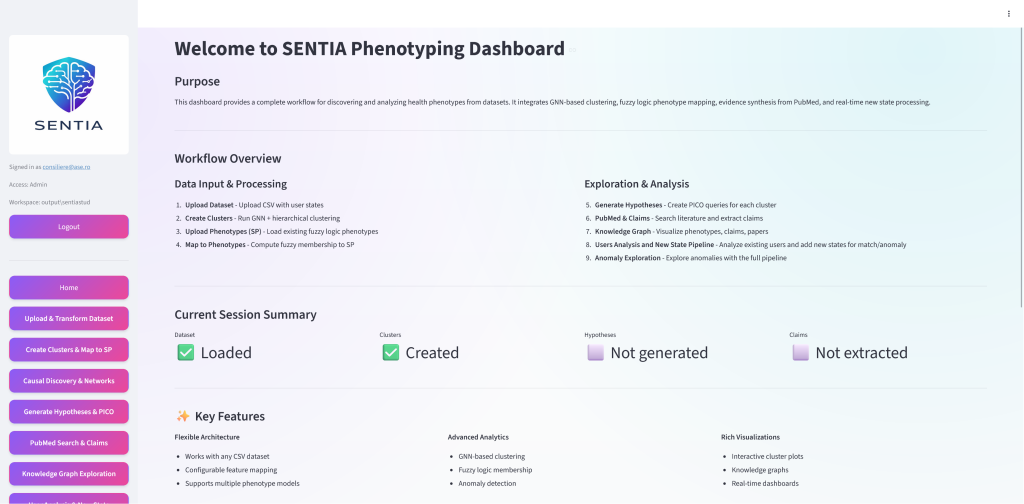
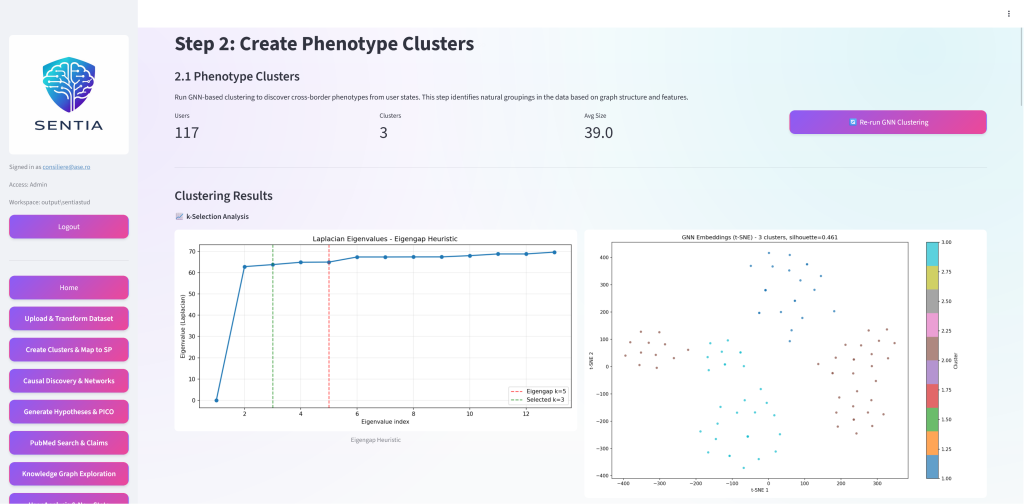
2. Phenotyping Engine
SENTIA includes an AI-powered Phenotyping Engine that transforms heterogeneous health, behavioral, and contextual data into clinically meaningful patient profiles.
The system integrates:
- Psychometric assessments
- Symptoms and complaints
- Lifestyle factors
- Sleep patterns
- Medication and physiological indicators
- Contextual stressors
- Linguistic signals
Using advanced analytics and causal discovery techniques, SENTIA identifies latent phenotypes representing distinct wellbeing and health patterns.
Examples include:
- Stress-driven sleep disturbance profiles
- Burnout-related phenotypes
- Menopause-associated symptom clusters
- Anxiety-related behavioral profiles
- Lifestyle-induced wellbeing deterioration patterns
The platform further explores relationships between influencing factors and outcomes, enabling specialists to understand not only what is happening, but also potential mechanisms contributing to observed symptoms.
Phenotypes are not diagnoses. They are exploratory analytical constructs intended to support clinical interpretation and personalized care planning.
3. PubMed Retriever and Paper Q&A
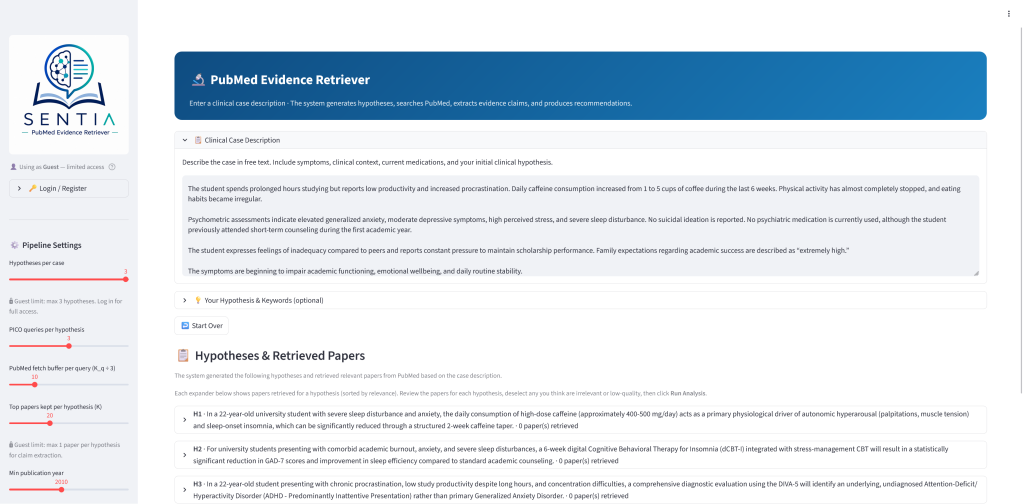
The PubMed Retriever acts as an AI-assisted clinical evidence agent inspired by state-of-the-art hypothesis-driven literature retrieval frameworks.
Starting from a clinician free-text description of the case, the system generates multiple plausible hypotheses regarding underlying mechanisms, contributing factors, or potential explanations for the observed presentation.
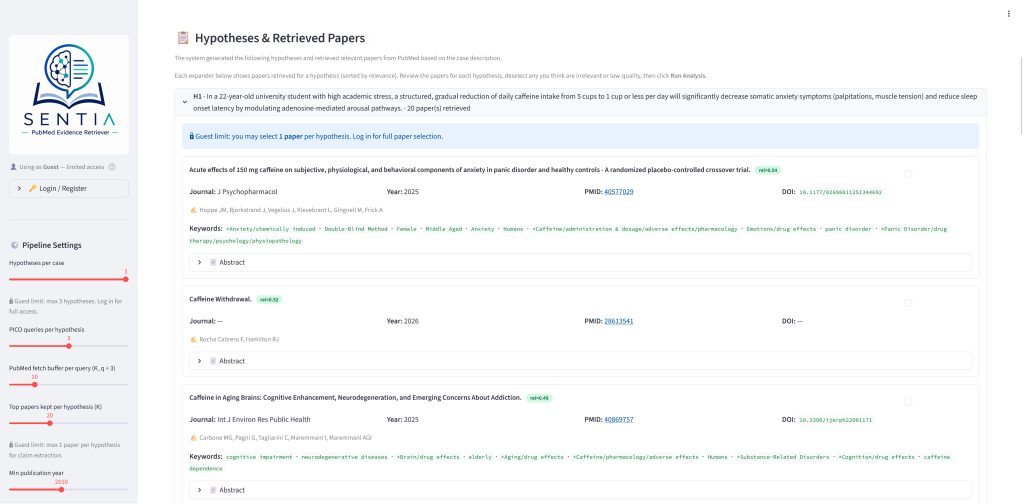
For each generated hypothesis, the system constructs optimized PubMed queries and retrieves the most relevant scientific publications.
Relevant findings are extracted from the retrieved literature, including:
- Reported mechanisms
- Clinical associations
- Risk factors
- Protective factors
- Treatment outcomes
- Intervention effectiveness
The retrieved evidence is consolidated into concise, explainable summaries linked to the original hypotheses. The platform generates evidence-informed recommendations and intervention pathways that specialists can review during clinical decision-making.
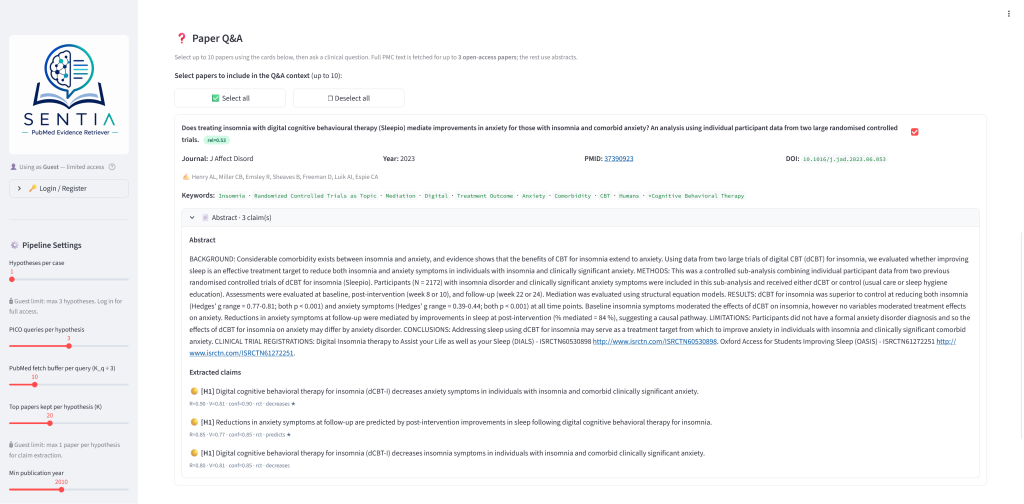
Paper Q&A – Beyond evidence retrieval, the system enables interactive questioning of retrieved scientific publications. Clinicians can ask natural-language questions and the system analyzes the retrieved papers, extracts relevant passages and claims, and generates grounded answers linked directly to the supporting scientific evidence. This allows specialists to rapidly explore literature, compare findings across studies, and obtain evidence-backed insights without manually reviewing dozens of publications.
Human-in-the-Loop by Design
SENTIA for Specialists is designed as an assistive system.
- It does not diagnose disorders.
- It does not prescribe medication.
- It does not autonomously modify treatment plans.
- It does not replace clinical expertise.
All outputs—including risk assessments, phenotypes, generated hypotheses, and literature-derived recommendations—require interpretation and validation by qualified professionals.
The goal of SENTIA for Specialists is to help specialists spend less time searching for information and more time understanding, supporting, and helping their patients.